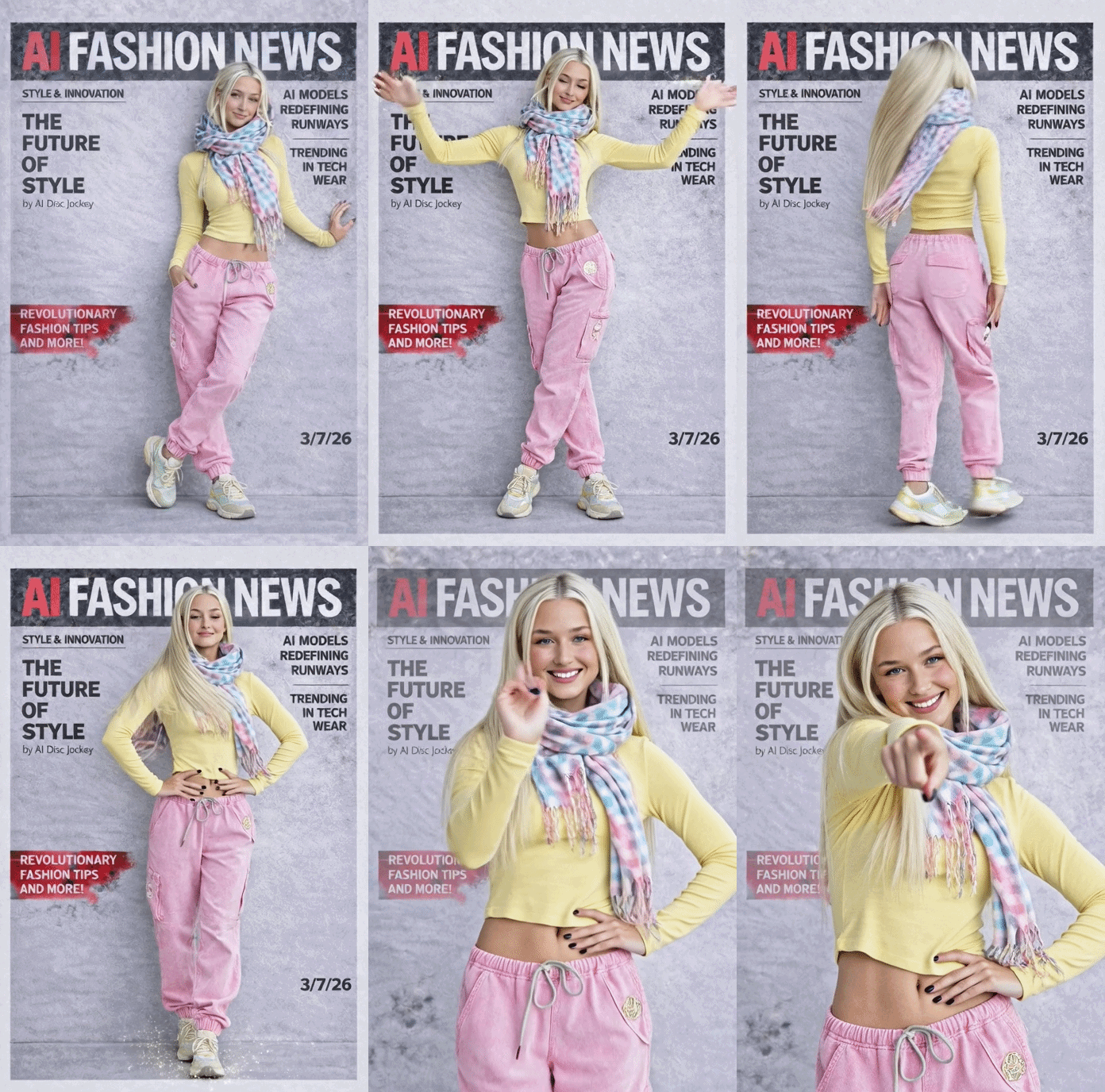
March 1, 2026 – March 7, 2026
By AI Disc Jockey | AI Fashion News — Where Creativity Meets Code – No 22
This week in AI + Fashion revealed just how quickly artificial intelligence is moving from experimentation to deep structural influence across the industry. What once felt like isolated creative tools is now emerging as a full ecosystem: powering image creation, shaping consumer shopping behavior, optimizing supply chains, and even helping govern the infrastructure behind global fashion events. From the studio to the storefront and from social media to global supply chains, AI is quietly becoming one of the most powerful forces shaping how fashion is designed, produced, marketed, and sold.
At the same time, global instability and technological acceleration are colliding in fascinating ways. Conflicts impacting raw materials, the rise of conversational commerce, the emergence of AI-powered styling culture, and the growing integration of AI into fashion weeks all highlight a new reality: fashion is no longer just about garments. It is becoming a data-driven industry where creativity, infrastructure, and geopolitics intersect.
Below is this week’s deeper dive into the biggest AI + Fashion developments shaping the industry right now.
An AI World Record, And War Hits Fashion’s Physical Inputs And Digital Infrastructure
Reporting from The Interline / The Ingenuity takes readers inside a major fashion studio to reveal just how deeply artificial intelligence has now penetrated the visual production pipeline. The behind-the-scenes look shows AI tools supporting everything from early mood boards and reference imagery to fully rendered editorial visuals used in marketing campaigns. In some cases, entire visual development cycles are now compressed from weeks into hours as creative teams iterate rapidly with generative tools.
The article also highlights a parallel and far more physical disruption facing the fashion ecosystem: war-driven instability in global supply chains that produce essential textile inputs. Fibre availability, manufacturing routes, and raw material costs are increasingly influenced by geopolitical tensions, creating new volatility for brands that depend on predictable sourcing. Together, these pressures illustrate a fascinating dual transformation — where fashion must simultaneously navigate digital acceleration and fragile physical infrastructure.
Why it Matters:
• AI is dramatically accelerating the production of fashion imagery and marketing assets
• Global conflicts are increasingly affecting textile supply chains and manufacturing inputs
• Fashion companies must now manage both digital disruption and geopolitical risk simultaneously
Los Angeles Fashion Week 2026 Is About to Begin
According to The Bureau Fashion Week, Los Angeles Fashion Week will run March 12–15, 2026, bringing designers, brands, and technology innovators together across venues throughout the city. The event continues to grow as a platform for experimental fashion culture, particularly highlighting emerging designers and independent labels operating at the intersection of design, sustainability, and digital technology.
What makes this year particularly notable is the growing presence of technology-driven experiences surrounding the runway. Designers are increasingly incorporating AI-assisted design tools, digital styling simulations, and immersive installations into their showcases. As a result, the event is becoming less about a single runway moment and more about an entire ecosystem of innovation and storytelling around fashion.
Why it Matters:
• Fashion weeks are evolving into technology-driven creative platforms
• Los Angeles continues to position itself as a hub for experimental and digital fashion
• AI tools are becoming part of the design and presentation process
Meta Tests “Agentic Commerce” in Meta AI
In reporting highlighted by Fashion Network, Meta has begun quietly testing a concept known as agentic commerce inside its Meta AI assistant. The feature allows users to search for products, compare different options, and potentially complete purchases through conversational interactions rather than traditional browsing interfaces.
For fashion brands, this signals the emergence of a radically different retail experience. Instead of navigating dozens of product pages, shoppers could increasingly rely on AI assistants to curate selections, recommend outfits, evaluate pricing, and guide purchases. Over time, the AI agent itself may become the first point of contact between consumers and fashion brands, fundamentally changing digital merchandising strategies.
Why it Matters:
• Conversational AI could fundamentally change how consumers shop online
• Fashion brands may need to optimize products for AI recommendation systems
• AI agents could become the new digital gatekeepers of e-commerce
AI Fashion Photography Gets a New Showcase
A new creative project highlighted by Dallas Weekly introduces a book titled Visionary, which explores how artificial intelligence is transforming the world of fashion photography. The publication showcases a collection of highly stylized editorial images produced using generative AI workflows that merge fashion aesthetics with experimental digital art.
What makes the project particularly compelling is how it illustrates a new creative process emerging across the industry. Photographers and digital artists are increasingly collaborating with AI systems to construct surreal environments, dramatic lighting scenarios, and editorial compositions that would be nearly impossible to achieve with traditional photography alone. The result is a new visual language blending fashion, storytelling, and computational creativity.
Why it Matters:
• AI is expanding the creative possibilities of fashion photography
• Editorial storytelling is evolving into hybrid human-AI collaboration
• New visual aesthetics are emerging from generative image tools
Viral AI Styling Trend on Social Media
A fascinating cultural trend reported by Sixth Tone reveals how users in China are beginning to rely on AI chatbots for real-time styling advice during live video calls. By simply showing their outfit through a camera, users can receive instant feedback on color combinations, layering choices, accessories, and overall styling suggestions.
This behavior signals a broader cultural shift where AI is becoming embedded in everyday fashion decision-making. Rather than waiting for curated fashion content or professional stylists, consumers are experimenting with conversational tools that provide immediate and personalized recommendations. The phenomenon is spreading quickly across social media platforms, where users share AI styling sessions and outfit transformations.
Why it Matters:
• AI is becoming a real-time personal stylist for consumers
• Social media culture is accelerating adoption of AI fashion tools
• Styling advice is shifting from human experts to hybrid AI guidance
OpenAI + CFDA Launch AI Innovation Hub for Designers
Coverage from ETIH highlights one of the most important institutional announcements of the week: a new collaboration between OpenAI and the Council of Fashion Designers of America (CFDA). The partnership will create a two-year innovation hub dedicated to helping designers explore how AI can support the creative and technical aspects of fashion design.
The initiative is designed to provide designers with access to advanced tools, experimentation environments, and educational resources that can accelerate innovation. Participants will explore applications ranging from concept development and pattern experimentation to workflow optimization and digital prototyping. The program reflects a growing belief that AI will soon be embedded in nearly every stage of the design lifecycle.
Why it Matters:
• Major fashion institutions are embracing AI as a core design tool
• Designers will gain access to structured experimentation and training
• The partnership may accelerate AI adoption across the fashion ecosystem
AI Becomes Infrastructure Behind New York Fashion Week
Industry coverage from ERP Today reports that SAP is positioning itself as the digital backbone of New York Fashion Week through a partnership with experiential technology firm N4XT Experiences. The collaboration focuses on integrating AI-powered data systems into the logistics, coordination, and analytics surrounding the event.
The goal is to transform fashion week into a fully instrumented digital ecosystem where data insights can track attendance patterns, audience engagement, and media distribution in real time. For organizers, designers, and sponsors, this infrastructure provides a much deeper understanding of how fashion events perform both physically and digitally. It also reflects how large cultural events are evolving into sophisticated technology platforms.
Why it Matters:
• AI is becoming the infrastructure behind major fashion events
• Data analytics will increasingly shape how fashion shows are managed
• Event ecosystems are evolving into digital intelligence platforms
Zara Unveils AI-Powered Virtual Try-On Feature
Reporting from the New York Post highlights Zara’s rollout of a new AI-powered virtual try-on feature inside its U.S. mobile app. The tool allows users to upload their photo and generate photorealistic avatars that model Zara outfits in a highly personalized digital fitting experience.
The technology addresses one of the biggest operational challenges in e-commerce: the uncertainty customers feel when purchasing clothing online. By allowing shoppers to visualize garments on realistic avatars that approximate their body type, brands can significantly increase purchasing confidence. Over time, tools like this could become a core layer of personalization across fashion retail.
Why it Matters:
• Virtual try-on tools could significantly reduce e-commerce return rates
• AI personalization is becoming a key competitive advantage for retailers
• Digital avatars may become a standard part of online shopping
AI Is Central to Operational Efficiency
Industry analysis reported by Apparel News emphasizes that in 2026 fashion companies are moving beyond AI experimentation and embedding intelligent systems directly into their core operations. From demand forecasting and inventory optimization to supply chain management and sustainability tracking, AI is now becoming a foundational operational layer.
The shift reflects a growing realization among executives that data-driven decision-making is essential in an increasingly complex global market. With supply volatility, changing consumer preferences, and tighter margins, AI provides brands with the analytical power needed to anticipate trends and respond quickly to market shifts.
Why it Matters:
• AI is transitioning from experimentation to operational infrastructure
• Data-driven decision-making is becoming standard across fashion businesses
• Companies that adopt AI early may gain significant competitive advantages
As we move deeper into 2026, several clear patterns are emerging across the AI + Fashion landscape:
• AI is rapidly becoming the operational backbone of the fashion industry
• Conversational AI and agentic commerce may redefine the future of shopping
• Fashion weeks are evolving into technology-driven cultural platforms
• AI-powered creative tools are expanding the boundaries of visual storytelling
• Global instability is colliding with digital transformation in unexpected ways
The fashion industry has always been driven by creativity and cultural momentum. But increasingly, its future will also be shaped by algorithms, data infrastructure, and intelligent systems working behind the scenes.
Stay ahead of the crowd.

Stay curious.
Stay expressive.
And above all—
Stay original.
 ᴀɪ ᴅɪꜱᴄ ᴊᴏᴄᴋᴇʏ
Leave a comment