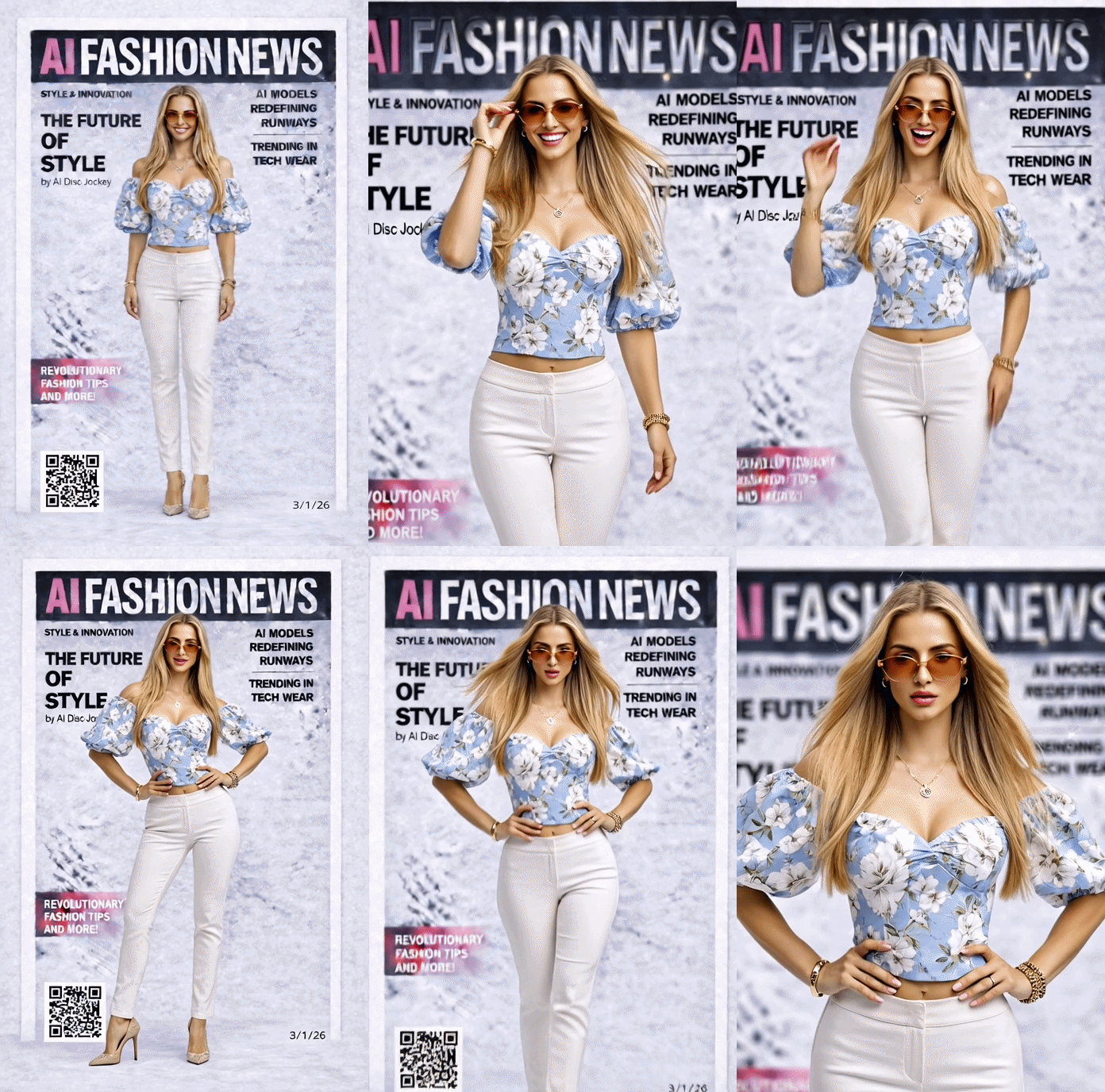
February 22, 2025 – February 28, 2025
By AI Disc Jockey | AI Fashion News — Where Creativity Meets Code – No 21
This week in AI and Fashion the conversation moved far beyond novelty and into narrative power, institutional accountability, and strategic reinvention. From Milan’s runways to the United Nations stage, from Meta-powered speculation to grassroots backlash, AI is no longer an experimental tool hovering at the edge of creativity — it is actively shaping identity, commerce, influence, and governance. Luxury leaders are debating ethics. Agencies are signing AI partnerships. Social apps are scaling style transfer globally. And consumer expectations are rising just as fast as the technology itself. The signal is clear: AI is not just augmenting fashion — it is restructuring it. What once felt like a futuristic subplot now reads like the industry’s central storyline.
• AI meets personal identity and styling
Milan Fashion Week: AI Drama & New Realities
The National covered Milan Fashion Week where the runway became a philosophical stage. Designers leaned into digital disruption, exploring how artificial intelligence intersects with couture craftsmanship and narrative storytelling. Rather than presenting AI as a gimmick, several collections embedded themes of synthetic reality, digital doubles, and algorithmic aesthetics directly into the garments and staging. The tension between tradition and transformation was palpable, underscoring a broader industry reckoning. Some houses even used immersive visuals and data-driven motifs to suggest how future ateliers might collaborate with machine intelligence.
The conversation did not stay abstract. Panels, backstage commentary, and front-row presence signaled that AI is now central to fashion’s future business model. From digital pattern generation to immersive storytelling, technology was treated as both collaborator and challenger. The week revealed a duality: AI as enhancer of imagination and AI as destabilizer of long-held hierarchies. In many ways, Milan functioned as a live laboratory, testing how far luxury can stretch without losing its soul.
Why it Matters:
• AI is now part of couture’s core narrative, not a side experiment.
• Luxury houses are publicly grappling with digital disruption.
• Fashion weeks are becoming technology forums as much as creative showcases.
Prada Designers Call Out Inequality & AI Challenges
Leadership at Prada used the global spotlight to confront uncomfortable truths as reported by the Guardian. In interviews and public remarks, inequality and AI disruption were named among fashion’s most pressing structural challenges. This signals a maturation in the AI conversation — from excitement to accountability. The industry’s elite creative minds are acknowledging that technological acceleration may deepen divides if left unchecked. Their remarks reframed innovation as a social responsibility, not just a competitive edge.
Rather than celebrating automation blindly, the discussion highlighted labor displacement, creative authorship, and the ethics of generative systems. Prada’s commentary reflects a broader luxury awakening: the need to align innovation with cultural responsibility. It suggests that AI governance is becoming a boardroom priority, not just a design experiment. The message was clear: the future of fashion must balance intelligence with inclusivity.
Why it Matters:
• AI ethics has entered luxury leadership discourse.
• Inequality concerns may shape adoption frameworks.
• Top brands are redefining what responsible innovation looks like.
Are Prada × Meta AI Glasses on the Way?
TechCrunch shared that speculation intensified after Mark Zuckerberg and Priscilla Chan appeared front-row at Prada’s show. Industry observers quickly connected the dots to Meta’s ambitions in wearable AI. The possibility of luxury-designed smart glasses blending aesthetic authority with advanced AI assistants ignited conversation across tech and fashion circles. The optics of Silicon Valley meeting Milanese elegance felt strategically choreographed.
Such a collaboration would mirror the convergence already seen between performance eyewear and augmented reality, but elevated through couture sensibility. It would position AI not as a visible gadget but as a seamless lifestyle layer. The fusion of high fashion and consumer AI hardware could accelerate mainstream adoption through design desirability. If realized, it could redefine eyewear as the next frontier of intelligent fashion accessories.
Why it Matters:
• Luxury design may normalize AI wearables.
• Hardware + couture partnerships could redefine smart accessories.
• Fashion weeks are becoming soft-launch stages for tech strategy.
Fashion Debate Hits UN Stage
At the United Nations, Portuguese designer Constança Entrudo spotlighted fashion’s cultural and technological potential. Fashion Network was ringside as the debate moved beyond aesthetics into sustainability, labor systems, and digital transformation. AI’s role in supply chains and creative equity entered an international policy context, signaling global institutional interest. The framing elevated fashion from trend cycle to economic and environmental stakeholder.
Fashion is no longer a peripheral cultural export; it is a strategic industry intersecting with sustainability mandates and economic frameworks. The inclusion of AI in these discussions reinforces its systemic relevance. The UN platform elevates the stakes from trend to governance. It also positions fashion leaders as active participants in shaping global tech policy conversations.
Why it Matters:
• AI in fashion is now part of global policy dialogue.
• Sustainability and tech are being treated as interconnected.
• International institutions are influencing fashion’s digital roadmap.
The $6B Reshaping of Fashion with AI
Economic projections estimate multibillion-dollar impact as AI reshapes design cycles, forecasting accuracy, and copyright enforcement. Brands are compressing production timelines using predictive modeling and generative prototyping. The shift is both creative and operational — from ideation to inventory management. Analysts suggest that early adopters are already seeing measurable efficiency gains.
However, this scale of transformation introduces legal and authorship complexities. Copyright frameworks must adapt to machine-assisted creation. The financial upside is significant, but so are regulatory and reputational risks. As investment accelerates, competitive divides between AI-fluent and AI-lagging brands are likely to widen.
Why it Matters:
• AI is driving measurable economic transformation.
• Legal frameworks must evolve alongside generative systems.
• Competitive advantage now depends on AI literacy.
THG Launches an AI-Driven, Shoppable Catwalk
THG introduced a real-time, AI-powered runway that integrates instant commerce. Viewers can shop looks dynamically, collapsing the gap between inspiration and transaction. This marks a shift from passive viewing to interactive retail immersion. The platform reportedly integrates personalization layers based on user behavior.
By embedding AI into the catwalk itself, the runway becomes both stage and storefront. It reimagines the traditional fashion show as a commerce engine. The format signals how experiential retail is evolving through intelligent systems. It also hints at a future where every show doubles as a data-driven conversion funnel.
Why it Matters:
• Runways are transforming into live retail interfaces.
• AI enables real-time personalization during shows.
• Immersive commerce is redefining audience engagement.
Gucci AI Controversy Sparks Backlash
Gucci faced criticism after releasing AI-generated campaign visuals ahead of a major show. Social media users described the imagery as inconsistent with the brand’s heritage. The backlash underscores that AI adoption without artistic coherence can erode brand trust. Online commentary suggested the visuals felt rushed and detached from Gucci’s established narrative codes.
Luxury consumers expect narrative continuity. When generative visuals feel disconnected from craftsmanship legacy, authenticity questions arise. This episode demonstrates that AI speed must align with brand DNA. It also highlights how quickly digital audiences can mobilize against perceived inauthenticity.
Why it Matters:
• AI missteps can trigger reputational backlash.
• Brand heritage must guide generative experimentation.
• Consumer trust remains fashion’s ultimate currency.
UN Office for Partnerships & Fashinnovation Explore AI’s Role
The UN Office for Partnerships and Fashinnovation convened leaders to examine AI across fashion value chains. Discussions ranged from sustainable sourcing to digital engagement ecosystems. The tone emphasized collaboration over competition. Participants highlighted measurable impact metrics as a priority.
AI is being positioned as a systems-level tool capable of aligning profitability with planetary responsibility. This signals cross-sector commitment to measurable impact. It reinforces the idea that innovation must support climate and equity goals. The convening reflects a coordinated push toward accountable tech deployment.
Why it Matters:
• AI is central to sustainable value-chain redesign.
• Public-private collaboration is accelerating innovation.
• Global alignment strengthens responsible tech adoption.
Together Group Signs with Multiply.co
Fashion Network announced that the fashion collective Together Group partnered with Multiply.co to expand internal AI capabilities. Creative agencies are building in-house AI infrastructure to stay competitive. This reflects a shift from outsourcing experimentation to embedding AI at the organizational core. The partnership signals confidence in AI as a long-term strategic pillar.
Agencies recognize that AI fluency now influences branding strategy, production workflows, and campaign agility. Adoption is no longer optional — it is structural. By integrating AI directly into agency ecosystems, firms can offer clients faster ideation and data-backed creative decisions. The move reinforces that AI competence is becoming table stakes in global fashion branding.
Why it Matters:
• Agencies are institutionalizing AI internally.
• Creative workflows are becoming tech-native.
• Competitive differentiation hinges on AI integration.
AI Style App LookTake Launches in Korea & U.S.
LookTake debuted simultaneously in Seoul and the U.S., offering real-time beauty and fashion style transfer. Digital Journal covered that users can instantly apply digital transformations to personal photos. This consumer-facing rollout highlights AI’s mainstream accessibility. The dual-market launch strategy underscores global ambition from day one.
By merging social sharing with advanced generative tools, LookTake blurs the line between influencer and everyday user. Personal styling becomes democratized through algorithmic creativity. The app reflects a broader shift toward participatory fashion culture powered by AI. It suggests that style experimentation is becoming frictionless and borderless.
Why it Matters:
• AI styling is scaling globally.
• Consumers are becoming co-creators.
• Social fashion platforms are entering an AI era.
AI Influencers & Fashion Culture
A major feature by Newsweek explores hyper-realistic AI influencers who never age, tire, or deviate from brand scripts. These digital personas challenge traditional notions of authenticity and aspirational culture. Psychological and ethical questions are intensifying. The article examined how constant algorithmic perfection may influence body image and identity standards.
Brands must navigate engagement metrics alongside human trust. The permanence and perfection of AI personas may reshape standards of beauty and relatability. Cultural responsibility now intersects with algorithmic design. As virtual personalities scale, regulatory and disclosure frameworks may follow.
Why it Matters:
• AI influencers are redefining social influence.
• Ethical scrutiny is increasing.
• Authenticity debates will shape brand strategy.
UK Fashion Brands Shift Strategy
New research reported by IT Brief UK indicates UK marketers are leaning into AI-powered personalization rather than viral hype cycles. Loyalty systems and predictive engagement tools are becoming strategic priorities. The pivot suggests long-term retention over short-term spectacle. Data-backed segmentation is replacing one-size-fits-all campaigns.
AI enables brands to understand consumer micro-preferences at scale. This data-driven shift signals a move toward stability and sustainable growth. By focusing on retention, brands may smooth revenue volatility. The strategy reflects a maturing digital ecosystem prioritizing relationship depth over reach alone.
Why it Matters:
• Personalization is replacing hype as growth engine.
• AI strengthens customer retention frameworks.
• Strategic marketing is becoming data-first.
As this week closes, one truth stands out: AI is no longer orbiting fashion — it is embedded in its structure, from couture ateliers to UN policy chambers, from social styling apps to boardroom ethics debates. The winners will not simply adopt AI quickly; they will adopt it wisely. The next chapter will belong to those who treat technology as both creative catalyst and cultural responsibility.
• AI is reshaping fashion’s creative, commercial, and cultural architecture.
• Governance, ethics, and sustainability are becoming inseparable from innovation.
• The next competitive edge belongs to brands that blend heritage with intelligent systems.
Stay ahead of the crowd

Stay curious.
Stay expressive.
And above all—
Stay original.
 ᴀɪ ᴅɪꜱᴄ ᴊᴏᴄᴋᴇʏ
Leave a comment