February 15, 2025 – February 21, 2025
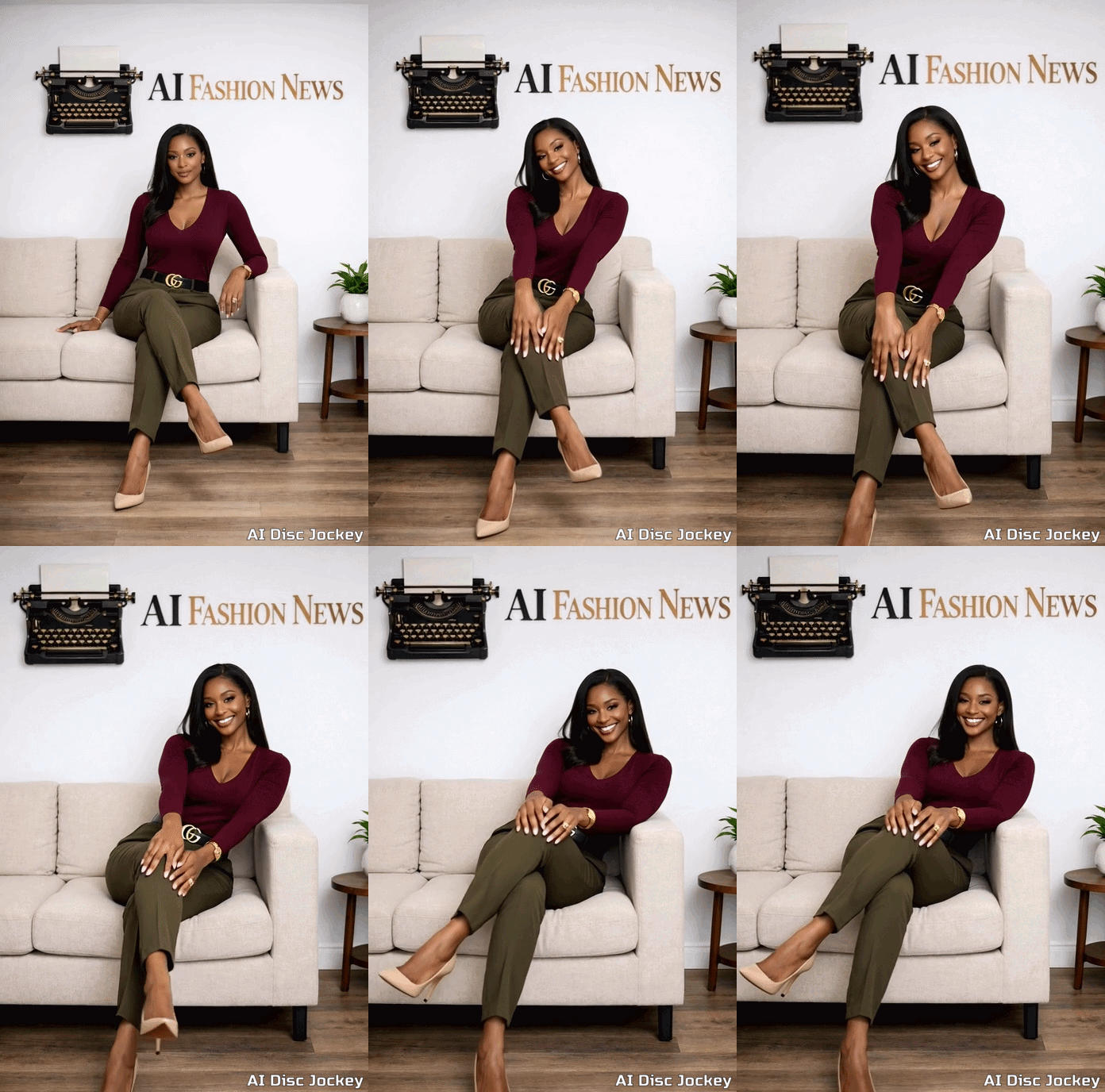
By AI Disc Jockey | AI Fashion News — Where Creativity Meets Code – No 20
We are no longer talking about AI as a backstage productivity tool. We are watching it move into the mirror, into the closet, onto the runway, into research labs, and even into advertising placements. This week’s stories signal a decisive shift: AI is becoming a participant in personal identity, not just a tool for brands. From agentic shopping assistants to AI-customized runway models, from simulated consumer sentiment to virtual trial rooms showcased at global summits, the fashion ecosystem is reorganizing around intelligence — contextual, predictive, and deeply personal. The question is no longer whether AI belongs in fashion. The question is how deeply it will define it.
Let’s dive in.
AI meets personal identity and styling — Stylz blends AI with human stylists
ET Edge Insights reports that Stylz is building something more nuanced than a recommendation engine. It merges artificial intelligence with human stylist expertise to construct living, evolving digital wardrobes tailored to the individual. The platform collects preference data, body shape inputs, lifestyle context, and purchase history to create recommendations that feel intentional rather than transactional. Importantly, it keeps human stylists in the loop, ensuring that emotional intelligence and cultural nuance remain part of the output. This hybrid structure positions AI not as a replacement, but as a co-pilot in personal expression.
The scalability aspect is equally compelling. Historically, personalized styling has been reserved for luxury clientele with discretionary income. Stylz attempts to bring that white-glove advisory layer to a broader consumer base through algorithmic efficiency. Over time, the system can learn seasonal preferences, fit sensitivities, and even confidence thresholds for experimentation. If successful, this could redefine fashion as a subscription-based intelligence service rather than a sporadic shopping event.
Why it Matters:
• AI meets personal identity and styling
• Democratization of luxury-level fashion services
• Hybrid intelligence (human + AI) may outperform pure automation
AI reimagines fashion icons — Bollywood mother-daughter pairs digitally restyled
Generative AI is increasingly being used to reinterpret cultural legacy, and this feature by Hindustan Times captures that shift vividly. AI systems digitally reimagined iconic Bollywood mother-daughter pairs in contemporary couture looks, blending nostalgia with forward-facing glamour. The visual output is more than aesthetic play — it becomes a dialogue between eras. By modernizing heritage figures, AI enables audiences to see cultural icons through a refreshed stylistic lens.
There is also a deeper commentary embedded here about authorship and authenticity. When AI restyles historical or cultural figures, it invites questions about creative ownership and narrative framing. Yet it also opens powerful opportunities for fashion houses and media platforms to remix archives without logistical constraints. This capability expands editorial creativity while simultaneously testing ethical boundaries around representation and consent. As generative storytelling grows, fashion will need frameworks to balance innovation with respect for legacy.
Why it Matters:
• AI reimagines fashion icons
• Cultural nostalgia meets generative storytelling
• Digital fashion narratives expand beyond physical constraints
AI + style on screen: Context-aware AI in closets — Pronti AI
Pronti AI is advancing what could become one of the most transformative categories in fashion tech: personal closet intelligence. The Manila Times shared that rather than focusing solely on recommending new purchases, the system maps what users already own and analyzes how often pieces are worn. It uses contextual signals like weather, calendar events, and lifestyle habits to propose outfits grounded in reality. This approach shifts AI from aspirational styling toward practical optimization. The result feels less like marketing and more like personal wardrobe management.
What makes this significant is its sustainability implication. If AI can maximize the utility of existing garments, it may slow unnecessary consumption. The platform also gathers nuanced feedback over time, learning what combinations spark confidence versus discomfort. This type of longitudinal learning could build highly individualized style blueprints. In a market fatigued by fast fashion cycles, contextual AI offers a counterbalance rooted in intentional use.
Why it Matters:
• AI + style on screen: Context-aware AI in closets
• Moves personalization from trend-based to wardrobe-based
• Aligns AI fashion with sustainability goals
How Do Your Consumers Feel? — AI simulates the customer
AI-driven consumer simulation tools are evolving beyond predictive analytics into behavioral modeling as reported by Business of Fashion. Brands are experimenting with synthetic customer agents trained on historical purchase behavior, demographic data, and sentiment trends. These AI personas can react to product concepts, pricing strategies, and campaign narratives in simulated environments. This dramatically accelerates insight cycles that once required months of surveys and focus groups. The efficiency gain alone could reshape product development timelines.
However, simulation fidelity remains the central challenge. If training data lacks diversity or nuance, synthetic feedback may reinforce blind spots rather than correct them. Brands must be transparent about how these systems are trained and validated. There is also a philosophical shift underway: decision-making begins to rely on modeled consumers rather than real-time human feedback. The opportunity is enormous, but so is the responsibility.
Why it Matters:
• AI simulates your customer
• Accelerates product and marketing decisions
• Raises ethical and bias considerations
What happens when AI does your shopping? — Retail implications
PYMNTS shared that Agentic AI shopping assistants are transitioning from experimental to operational. These systems can compare prices, analyze reviews, evaluate fit data, and complete purchases autonomously. For consumers, this reduces friction and time investment. For brands, it changes the discovery equation entirely. Visibility becomes a technical optimization challenge rather than purely a branding exercise.
Retail environments may increasingly cater to algorithms as much as humans. Product descriptions, metadata, and compatibility signals will need to be structured for machine interpretation. This evolution could compress impulse purchasing but expand precision buying. It also reframes loyalty — consumers may become loyal to their AI assistant rather than a single retailer. That shift could be seismic for the fashion industry.
Why it Matters:
• AI agents reshape retail discovery
• Brand visibility becomes algorithm-facing
• Consumer autonomy meets automation trade-offs
TCS unveils virtual trial tech at AI Summit 2026
At AI Summit 2026, UNI reported that TCS introduced advanced virtual trial technology designed to simulate garment fit without physical fitting rooms. The system uses body-mapping, motion modeling, and real-time rendering to create realistic digital try-ons. Unlike earlier AR overlays, this approach attempts to model how fabric drapes and stretches. Accuracy is central because return rates remain one of fashion retail’s largest cost burdens. The closer the simulation mirrors reality, the greater the commercial impact.
This technology also speaks to accessibility. Virtual trial solutions allow consumers to experiment privately and confidently. In regions where physical retail infrastructure is limited, digital fitting becomes a powerful equalizer. For global brands, scalable try-on tech reduces logistical friction across markets. The innovation bridges physical retail experience with digital convenience.
Why it Matters:
• Virtual trial tech moves toward realism
• Reduces return rates and waste
• Retail infrastructure becomes hybrid-digital
How Reddit Plans to Be the Antidote to AI Shopping
As algorithm-driven shopping tools proliferate, Reddit is positioning its communities as authenticity anchors. Vogue reports that Real user reviews, discussions, and lived experiences add qualitative depth that AI recommendation engines often lack. Rather than resisting AI, Reddit aims to layer community feedback alongside automated suggestions. This creates a blended ecosystem of machine efficiency and human validation. In fashion, where taste and trust are paramount, that combination is powerful.
Communities often surface micro-trends before algorithms detect them. They also flag product quality issues and sizing discrepancies in real time. Integrating AI tools within these communities could enhance discovery without eroding authenticity. The tension between automation and human voice becomes a defining theme of 2026 commerce. Trust may become the ultimate differentiator.
Why it Matters:
• Community as counterweight to AI
• Trust becomes competitive advantage
• Social validation re-enters commerce loops
True Fit Launches Agentic AI Shopping Experience
Yahoo! Finance featured that True Fit has long specialized in sizing intelligence, and its expansion into agentic AI shopping marks a natural evolution. By combining detailed body data with predictive recommendation systems, it aims to minimize fit uncertainty. Fit remains one of the most persistent friction points in e-commerce. When sizing confidence improves, return rates decline and satisfaction rises. The commercial upside is substantial.
Agentic integration means the AI can proactively suggest alternatives if inventory shifts or sizing anomalies arise. This dynamic responsiveness strengthens personalization. It also highlights the broader movement toward full-stack fashion intelligence platforms. In a competitive landscape, companies that solve fit at scale will likely lead the next growth wave.
Why it Matters:
• Fit intelligence powers agentic shopping
• Personalization moves beyond aesthetics
• Reduces costly retail inefficiencies
Fashion in 2026: AI, Resale and Return to Analog Consumption
Thrifted Mag forecast reports suggest a fascinating duality shaping 2026: rapid AI adoption alongside a renewed appreciation for analog experiences. As digital interfaces saturate everyday life, consumers appear to crave tactile, slower forms of engagement. Resale platforms are growing as shoppers seek uniqueness and sustainability. AI may ironically facilitate this shift by improving authentication and discovery within resale markets. The future is not purely digital — it is digitally enabled intentionality.
This trend reflects psychological recalibration. Consumers increasingly value craftsmanship, narrative, and durability. AI-driven insights may help brands align inventory with these values rather than mass overproduction. The interplay between acceleration and restraint defines the next chapter of fashion strategy. Balance, not excess, may become the winning formula.
Why it Matters:
• AI growth coexists with analog revival
• Resale economy expands
• Consumer psychology shifts toward intentionality
NYFW Meets AI Tech
The Newman Time-Herald was front and center at New York Fashion Week as it showcased brands experimenting with AI-enabled smart mirrors and virtual try-on integrations. These installations connect runway spectacle directly to retail pathways. Attendees can visualize garments beyond the catwalk moment, bridging aspiration and transaction. Data captured during these interactions feeds back into personalization engines. The runway becomes a data-generating environment.
This convergence shortens the gap between inspiration and purchase. It also transforms physical events into hybrid digital ecosystems. Fashion weeks are no longer isolated cultural moments — they are commerce accelerators. AI becomes the connective tissue between experience and conversion.
Why it Matters:
• NYFW integrates AI retail tools
• Runway becomes commerce gateway
• Data flows from spectacle to storefront
Paris Fashion Week: HELIOT EMIL’s AI-customized model
Botika was at HELIOT EMIL’s AW26 presentation that featured a fully customized AI model that extended beyond traditional human runway norms. The digital figure allowed for stylized experimentation impossible with physical constraints. Lighting, movement, and garment interaction were programmable variables. This reframes the runway as a simulation environment rather than a fixed stage. Creative direction expands dramatically under such conditions.
Digital models also open discussions about representation and identity in fashion. They can embody diversity without logistical limitations, but they also raise questions about realism and displacement. As luxury brands experiment with AI avatars, the boundary between virtual and physical aesthetics will continue to blur. The runway is becoming partially synthetic.
Why it Matters:
• AI models redefine runway presentation
• Digital humans enter luxury narratives
• Fashion storytelling becomes programmable
Brands Rethink AI Marketing — Conversational placements emerge
The Knot started the week with reporting that as conversational AI platforms test integrated advertising formats, brands are adapting quickly. Instead of static banners, placements become embedded within dialogue flows. This demands tonal sensitivity and contextual awareness. Consumers are less tolerant of overt interruption inside conversational interfaces. Relevance becomes currency.
For fashion brands, this means crafting messages that feel assistive rather than promotional. Performance metrics may shift from clicks to engagement depth. The conversational economy rewards authenticity and precision. Marketing teams must now collaborate with prompt engineers and conversational designers.
Why it Matters:
• Conversational AI reshapes brand visibility
• Context replaces interruption
• Marketing strategy must evolve with dialogue interfaces
This week confirms what you’ve been signaling through AI Fashion News: intelligence is no longer peripheral — it is infrastructural. AI is entering the emotional core of fashion — identity, trust, fit, storytelling, and community. The runway is programmable. The closet is contextual. The consumer may soon be partially synthetic.
The through-lines:
• AI is becoming personal — embedded in identity, closets, and fit
• Community and authenticity are rising alongside automation
• Retail, runway, and research are converging into intelligent ecosystems
• Brands must optimize not only for humans — but for agents
Stay ahead of the signal, not the noise.

Stay curious.
Stay expressive.
And above all—
Stay original.
 ᴀɪ ᴅɪꜱᴄ ᴊᴏᴄᴋᴇʏ
Leave a comment