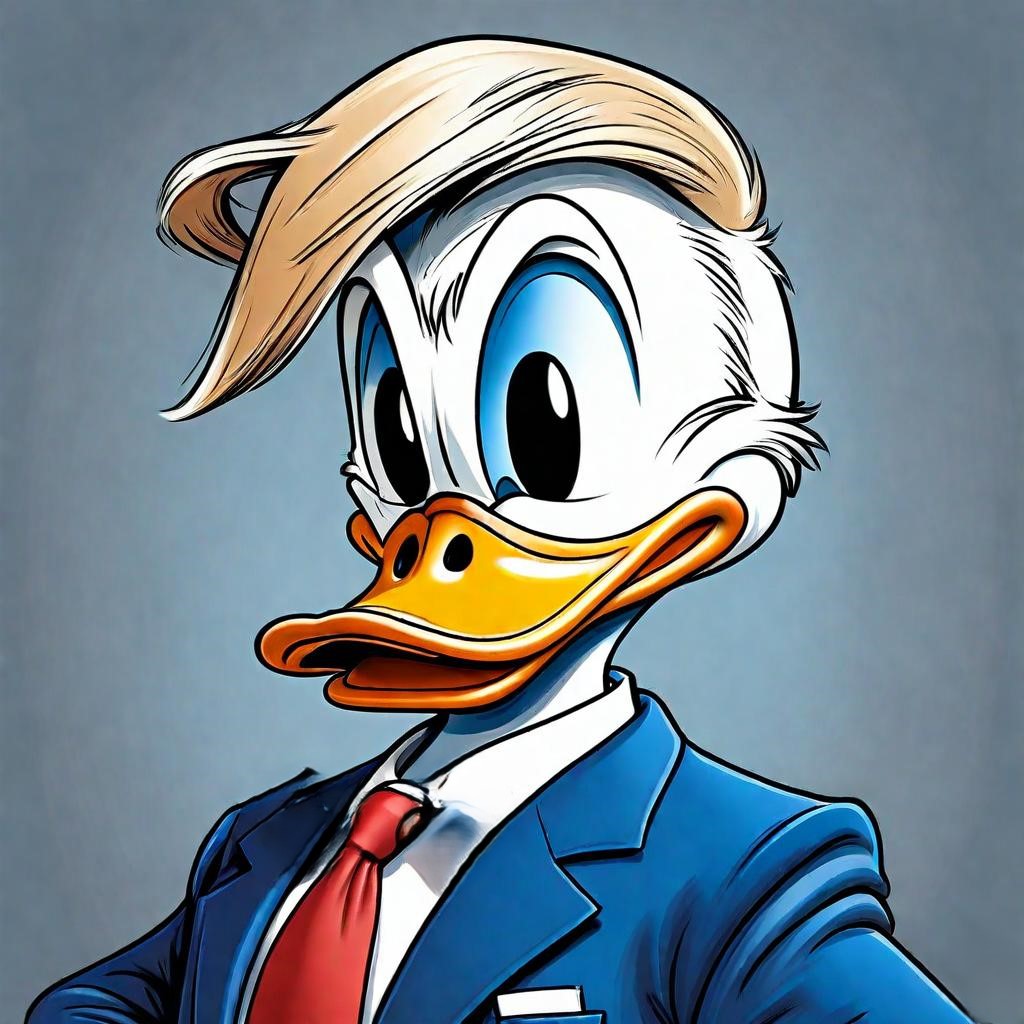
To compare the popularity of Donald Trump and Donald Duck is to juxtapose two figures vastly different in nature, influence, and cultural impact. One is a former U.S. president, real estate mogul, and reality TV star with a polarizing persona; the other is a beloved cartoon character, known for his sailor suit, explosive temper, and distinctive quacking voice. But which “Donald” holds the crown as the most popular? This question invites analysis of popularity in terms of cultural reach, public sentiment, and long-standing influence.
Donald Trump’s popularity surged when he entered politics and eventually won the U.S. presidential election in 2016. He had already been a household name for decades due to his real estate ventures, appearances in pop culture, and starring role on the reality show The Apprentice. Trump’s appeal, however, remains polarizing. His political tenure inspired a passionate base, known as “MAGA” (Make America Great Again) supporters, who view him as a champion against political elitism. Polls indicate that Trump’s popularity fluctuates with political developments. In 2021, Gallup reported his approval rating at 34%, one of the lowest for a departing president. However, his influence within the Republican Party is strong, evidenced by his significant impact on the party’s direction, endorsements, and voter loyalty.
Contrastingly, Donald Duck’s popularity is largely uncontroversial. Created by Walt Disney Productions in 1934, Donald Duck is a global icon, known for his irritable yet endearing personality. The duck’s adventures, often paired with his pals Mickey Mouse and Goofy, have entertained generations, building a legacy that spans films, TV shows, comic books, and theme parks worldwide. A 2020 study by Disney found that Donald Duck is among the most recognized cartoon characters globally, with merchandise and fan art reaching from the U.S. to Japan, where he enjoys significant admiration. In contrast to Trump’s political controversies, Donald Duck’s appeal lies in his relatability, embodying human flaws like anger and impatience in a humorous, lovable way.
The scope of influence also varies drastically. Trump’s political influence has a more tangible impact on policies, national and international affairs, and cultural debates. According to The New York Times, his supporters see him as a transformative figure, while critics argue he represents division. Donald Duck, however, brings a universally accessible form of escapism and joy, transcending political boundaries. Disney’s legacy has ensured that Donald Duck has an enduring presence across cultures. Studies on brand recognition place Donald Duck as a central figure in Disney’s brand identity, securing a warm, nostalgic spot in the hearts of fans.
The popularity of each “Donald” ultimately depends on context. In political circles, especially among conservatives, Trump holds substantial influence. Among fans of animation and pop culture, Donald Duck reigns as an international favorite. As a testament to this, Disneyland attractions and Donald Duck-themed merchandise continue to flourish, while Trump’s image frequently graces political rallies and headlines.
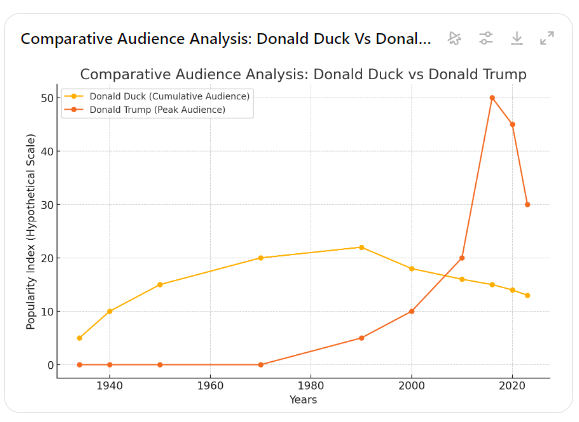
This visualization highlights Donald Duck’s sustained appeal over decades, contrasting with Donald Trump’s more recent and intense popularity peaks.
In conclusion, while Trump commands substantial popularity in political realms, Donald Duck enjoys a steady, broad-based popularity worldwide that is largely apolitical. The choice of the “most popular Donald” likely depends on one’s perspective, yet Donald Duck’s role as a cultural icon provides a form of timeless popularity that stands in contrast to Trump’s divisive, issue-driven appeal.

 ᴀɪ ᴅɪꜱᴄ ᴊᴏᴄᴋᴇʏ
Leave a comment