Halloween Skeletons and Pumpkins
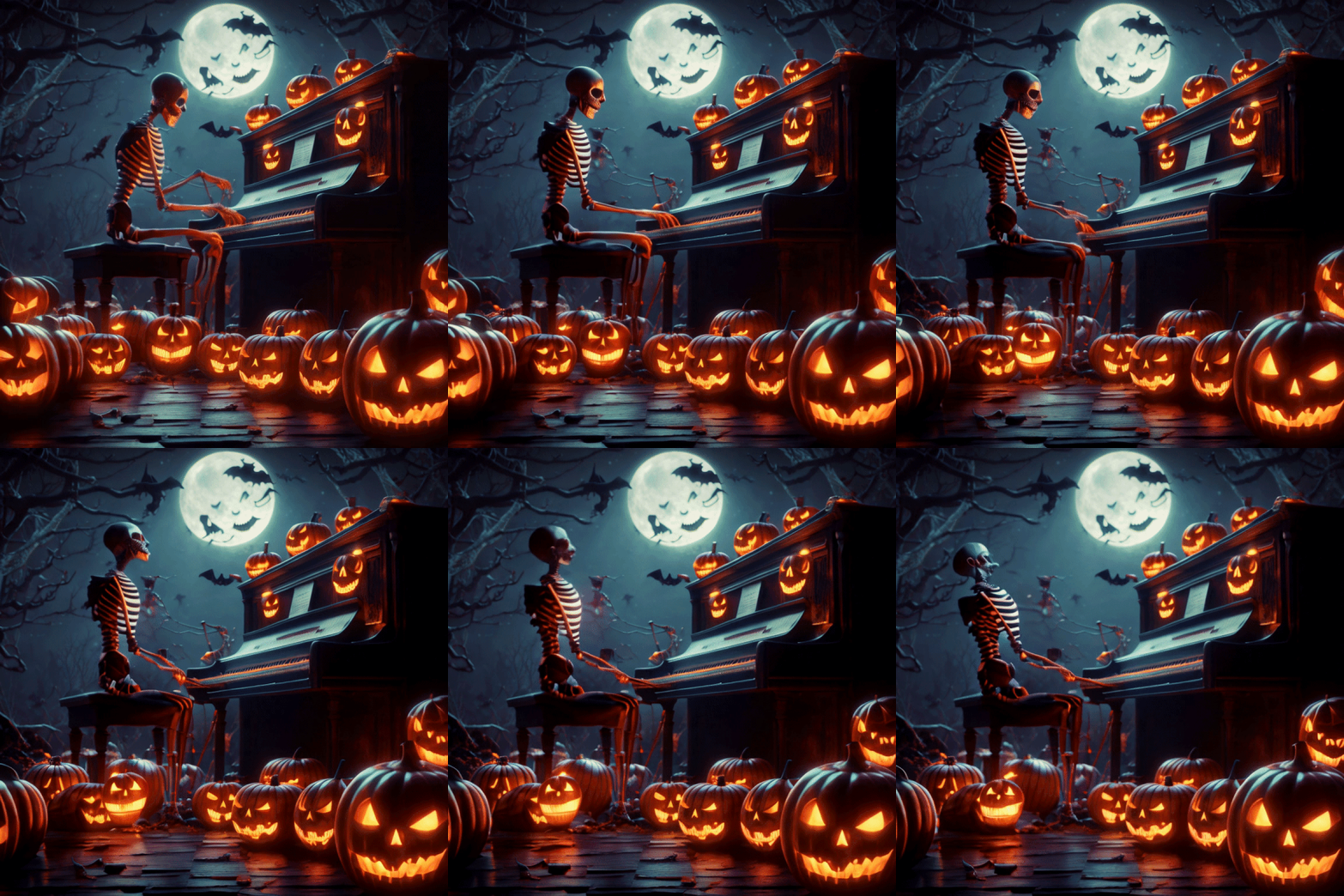
The use of skeletons and pumpkins as symbols of Halloween has a fascinating history that spans centuries.
Halloween, also known as All Hallows’ Eve, has ancient roots that date back to Celtic and Roman festivals. The Celts celebrated Samhain, a festival marking the end of the harvest season and the beginning of winter. It was believed that during this time, the boundary between the living and the dead was blurred, allowing spirits to return to Earth.
The Role of Skeletons. Skeletons have long been associated with death and the afterlife. In medieval Europe, the Dance of Death, or Danse Macabre, was a popular theme in art and literature. It depicted skeletons leading people from all walks of life to the grave, emphasizing the universality of death. This theme later became intertwined with Halloween, where skeletons were used to represent the presence of spirits and the supernatural.
The Carved Pumpkin. The practice of carving vegetables, particularly turnips and later pumpkins, into lanterns, has its origins in Ireland and Scotland. The carved lanterns were originally intended to ward off evil spirits, and they were known as “Jack-o’-lanterns.” The term “Jack-o’-lantern” is derived from the Irish folktale of “Stingy Jack,” a cunning man who tricked the devil and was doomed to wander the earth with only a carved turnip lantern to light his way.
The American Influence. The use of pumpkins as lanterns became more prominent in North America, where pumpkins were readily available and easier to carve than turnips. This transformation led to the classic image of the jack-o’-lantern, which remains a symbol of Halloween.
Over time, Halloween evolved into a holiday that combines various cultural elements. Skeletons, inspired by the earlier Dance of Death, were incorporated into Halloween decorations and costumes to represent the spooky and supernatural aspects of the holiday. They are often associated with ghosts, ghouls, and the idea of life after death.
Today, skeletons and jack-o’-lanterns are two of the most recognizable symbols of Halloween. They serve as iconic decorations, often found in haunted houses, on doorsteps, and in parades during the Halloween season. These symbols continue to represent the holiday’s historical ties to the supernatural, the afterlife, and the thin veil between the living and the dead.

 ᴀɪ ᴅɪꜱᴄ ᴊᴏᴄᴋᴇʏ
Leave a comment